
Harvey Learns About Healthy Food
Hi friends — Harvey here.
Today I had a visit with someone new.
My mom said, “Harvey, we’re going to meet a nutritionist.”
“A nu-tri-what?” I asked.
“A nutritionist,” she smiled. “That’s someone who helps us learn how food helps our bodies grow strong and healthy.”
I liked that idea.
When we got there, the nutritionist greeted me warmly.
“Hi Harvey! I’m so glad you’re here.”
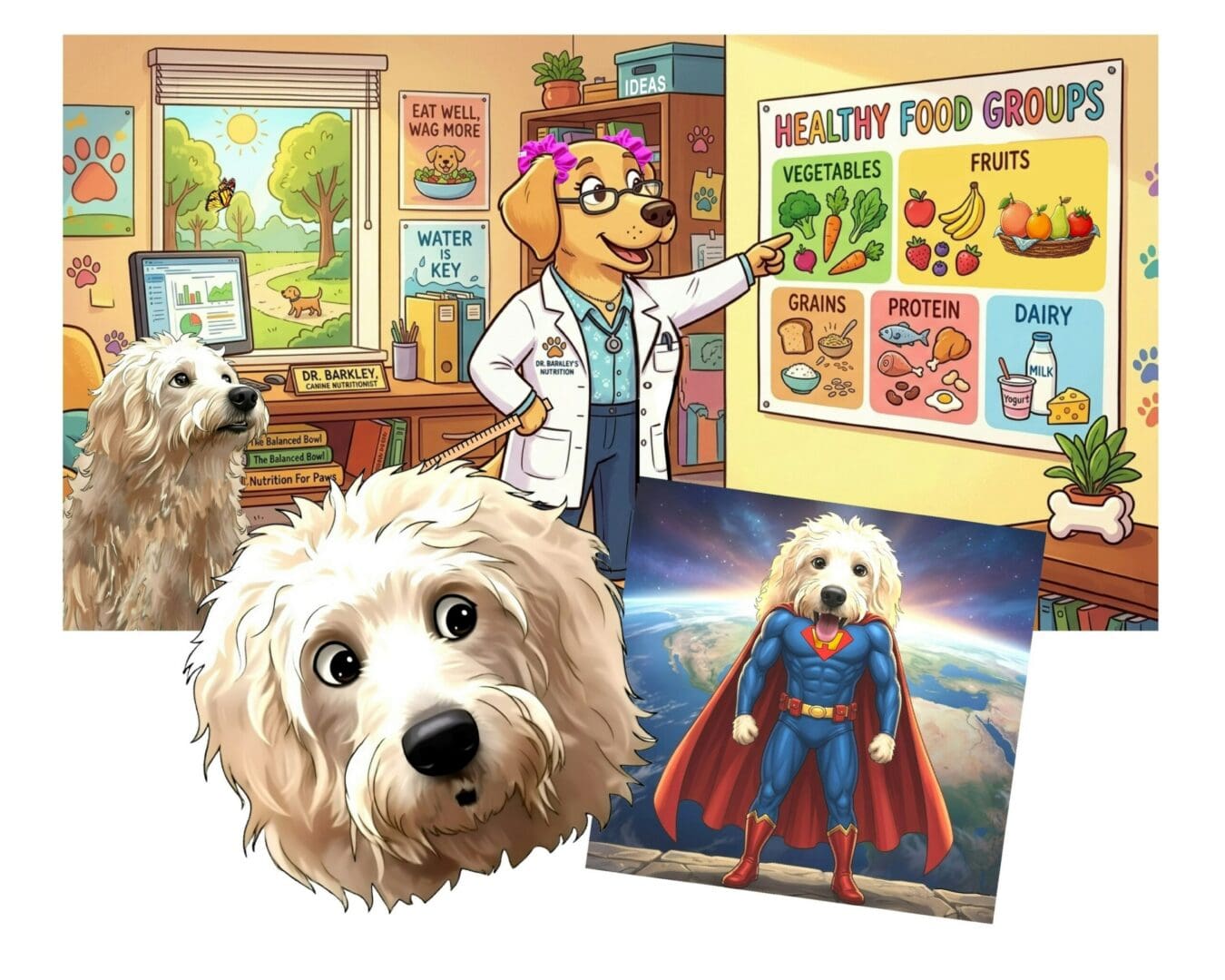
She had colorful pictures of foods all around her room.
“Let’s talk about food,” she said.
“I like food!” I said quickly. “Especially treats.”
She laughed gently.
“Treats can be fun sometimes,” she said, “but most of the time, food is like fuel.”
“Fuel?” I asked.
“Yes,” she said. “Food gives your body energy to run, play, think, and grow.”
I thought about that.
“So food helps my body… and my brain too?” I asked.
“Exactly,” she said. “A healthy body and a healthy mind both need good fuel.”
Then she showed me different kinds of foods.
“These are called food groups,” she explained.
She pointed to colorful fruits and vegetables.
“These help keep your body strong and healthy.”
Then she showed grains like bread and rice.
“These give you energy.”
Then protein foods like beans, eggs, and meat.
“These help your muscles grow.”
And dairy foods like milk and yogurt.
“These help build strong bones.”
“Wow,” I said. “That’s a lot of different foods!”
“That’s why we try to make balanced meals,” she said. “That means including different kinds of foods.”
Then I had a question.
“Do I have to like every food?” I asked.
She smiled.
“No, you don’t have to like everything. But it’s important to try new foods so you can learn what you like and what you don’t.”
“I can try,” I said.
“That’s all we ask,” she said kindly.
Then we talked about how much to eat.
“Your body is very smart,” she said. “It can tell you when you are hungry… and when you are full.”
“Sometimes I want to keep eating even when I’m full,” I admitted.
“That happens,” she said. “But eating just enough helps your body feel good. Eating too much can make your stomach hurt.”
I remembered that feeling.
“I don’t like when my stomach hurts,” I said.
“Most people don’t,” she said gently.
Then she said something very important.
“Food is not a reward or a punishment,” she explained. “Food is something we use to take care of our bodies.”
I thought about that for a moment.
“So… food helps me be strong and feel good,” I said.
“Yes,” she said. “That’s exactly right.”
On the way home, I told my parents,
“I want to try new foods and make balanced meals!”
“That’s a great plan,” they said.
That night at dinner, I looked at my plate.
There were different kinds of foods.
I took a bite of something new.
“Hmmm,” I said. “I’m still deciding.”
My parents smiled.
And I learned something really important:
Food helps my body and my mind—and trying new things helps me grow.
Goodnight, friends. 🍎💛
Talk About It
- What are some foods you already like?
- Is there a new food you could try?
- How does your body feel when you are hungry? How does it feel when you are full?
A Note for Parents and Caregivers
This story introduces foundational nutrition concepts in a developmentally appropriate way, emphasizing balance, curiosity, and internal cues (hunger and fullness).
Key messages to reinforce:
- Food is fuel for both the body and the brain
- Balanced meals include a variety of food groups
- Children benefit from being encouraged—but not pressured—to try new foods
- Avoid using food as a reward or punishment
- Help children recognize hunger and fullness cues
You can support your child by:
- Offering a variety of foods regularly
- Modeling balanced eating behaviors
- Encouraging “one bite to try” without pressure
- Keeping mealtimes calm and positive