
Harvey Learns the Difference Between Tattling and Helping
Young children often struggle to know what to do when they see someone tell a lie. This story helps children understand that there is a difference between tattling or telling to get someone in trouble and seeking help when a problem needs to be fixed.
Key Messages:
- Telling the truth is important.
- Friends can make mistakes.
- Sometimes talking kindly to a friend is the first step.
- Trusted adults can help solve problems.
- Asking for help is not tattling when someone could get hurt or treated unfairly.
THE STORY
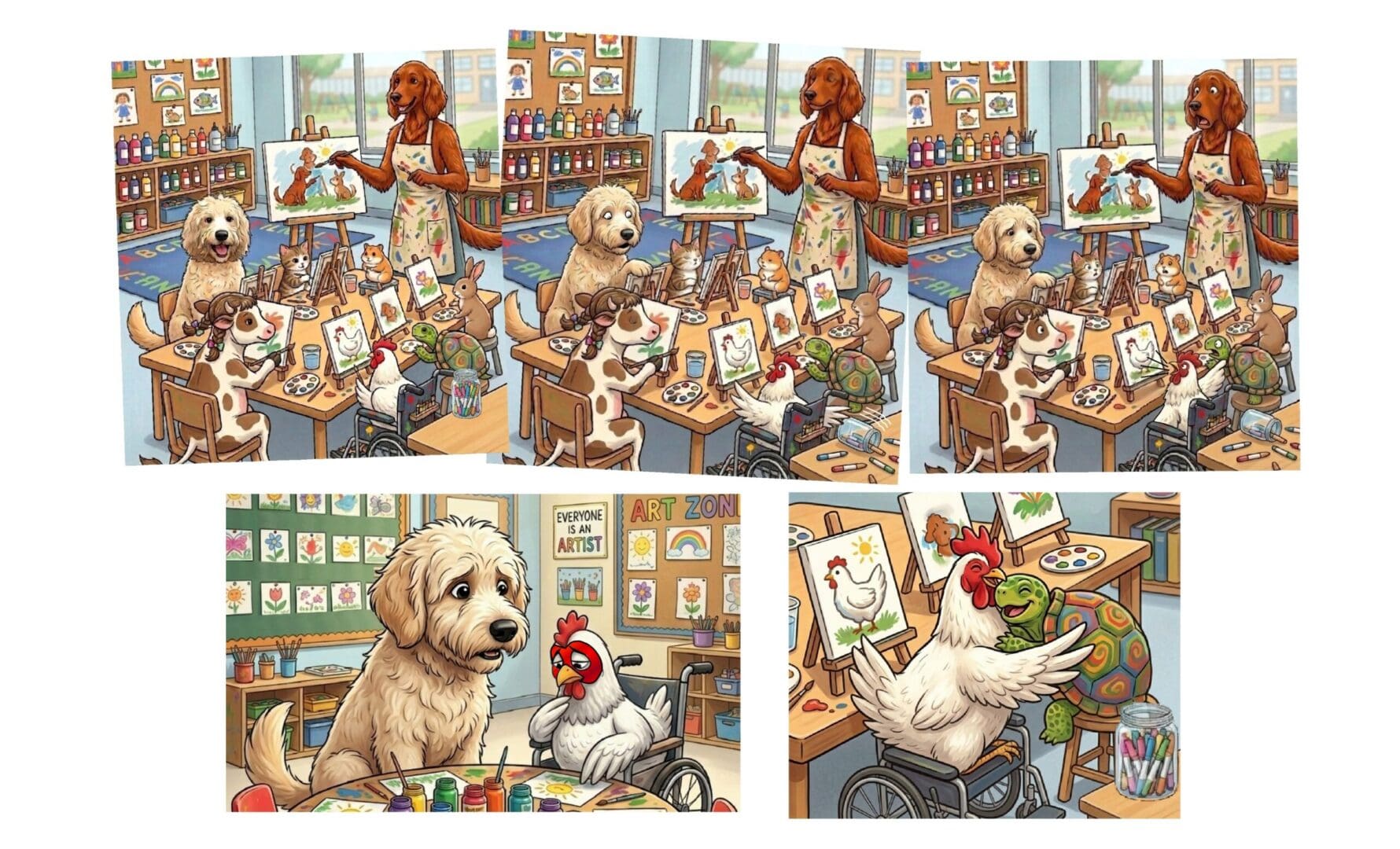
One afternoon, Harvey's class was working on a special art project.
Everyone was using paints, markers, and glitter to make posters for the school hallway.
Harvey was carefully drawing a bright yellow sun when he heard a loud crash.
CLATTER!
A jar of markers fell to the floor.
Markers rolled everywhere.
Ms. Porter looked up from helping another student.
"Oh dear," she said. "What happened?"
Harvey had seen exactly what happened.
His friend Theo the chicken had accidentally bumped the table with his wing.
But before Harvey could say anything, Theo quickly pointed across the room.
"It was Mateo," Theo said.
Mateo the turtle looked surprised.
"What?" he asked. "I didn't do it."
Harvey's stomach felt funny.
He knew Mateo hadn't knocked over the markers.
He knew Theo was not telling the truth.
But now Harvey wasn't sure what to do.
Theo was his friend.
Harvey didn't want Theo to get in trouble.
But Mateo was being blamed for something he didn't do.
Harvey quietly picked up a few markers while he thought.
"What should I do?" he wondered.
After art class, Harvey found a quiet moment with Theo.
"Theo," Harvey said gently, "I saw what happened."
Theo looked down.
"I know," he said softly.
"You accidentally bumped the table."
Theo nodded.
Harvey sat beside him.
"Why did you say Mateo did it?"
Theo sighed.
"I didn't mean to. I was scared."
"Scared of what?" Harvey asked.
"Getting in trouble."
Harvey understood that feeling.
Sometimes he worried about getting in trouble too.
"My dad says everyone makes mistakes," Harvey said. "But mistakes usually get bigger when we try to hide them."
Theo was quiet for a moment.
"I guess that's true."
Harvey thought carefully.
He didn't want to embarrass his friend.
He didn't want to be mean.
But he also knew Mateo deserved the truth.
Theo looked toward Ms. Porter's classroom.
"I think I should tell her the truth."
Harvey smiled.
"I think that's brave."
Together they walked to Ms. Porter's desk.
Theo took a deep breath.
"Ms. Porter," he said, "I need to tell you something."
Ms. Porter listened.
"The markers fell because I bumped the table. Mateo didn't do it."
Ms. Porter nodded.
"Thank you for telling the truth."
Theo looked relieved.
"Aren't you mad?" he asked.
"Everyone makes mistakes," Ms. Porter said. "What matters is taking responsibility and making things right."
Then she looked at both students.
"I am proud that you were honest."
Later that afternoon, Harvey asked Ms. Porter a question.
"What if Theo hadn't told the truth?" he asked.
Ms. Porter smiled.
"That's a thoughtful question."
She pulled up a chair beside him.
"Sometimes we can solve a problem by talking kindly with a friend first, just like you did today."
Harvey nodded.
"But if someone is getting hurt, someone is being blamed unfairly, or the problem isn't getting fixed, it's important to ask a trusted adult for help."
"So that's not tattling?" Harvey asked.
"No," said Ms. Porter. "Tattling is usually trying to get someone in trouble. Helping is trying to keep people safe and make things right."
Harvey thought about that.
That made sense.
He hadn't wanted Theo to get in trouble.
He wanted Mateo to be treated fairly.
And he wanted his friend to tell the truth.
On the walk home, Harvey felt proud.
He had learned something important.
Good friends don't help each other hide mistakes.
Good friends help each other make things right.
The End.
TALK ABOUT IT
- Why did Theo tell a lie?
- How do you think Mateo felt when he was blamed?
- Why was Harvey unsure about what to do?
- What did Harvey do first?
- Why was it brave for Theo to tell the truth?
- What is the difference between tattling and helping?
- Who are trusted adults you can talk to when you need help?
Harvey's Truth Check
Before you decide what to do, ask yourself:
🐾 Is someone getting hurt?
🐾 Is someone being blamed unfairly?
🐾 Can I talk kindly to my friend first?
🐾 Do I need help from a trusted adult?
If the problem is hurting someone or cannot be fixed alone, it is okay to ask for help.
That is helping, not tattling.
ACTIVITY
What Would Harvey Do?
Ask your child:
- A friend accidentally spills milk and says nothing happened. What could Harvey do?
- Someone blames another child for a mess they didn't make. What could Harvey do?
- A friend tells a lie that could hurt someone's feelings. What could Harvey do?
Talk about when it might be helpful to speak with a trusted adult and when a kind conversation with a friend might solve the problem.