
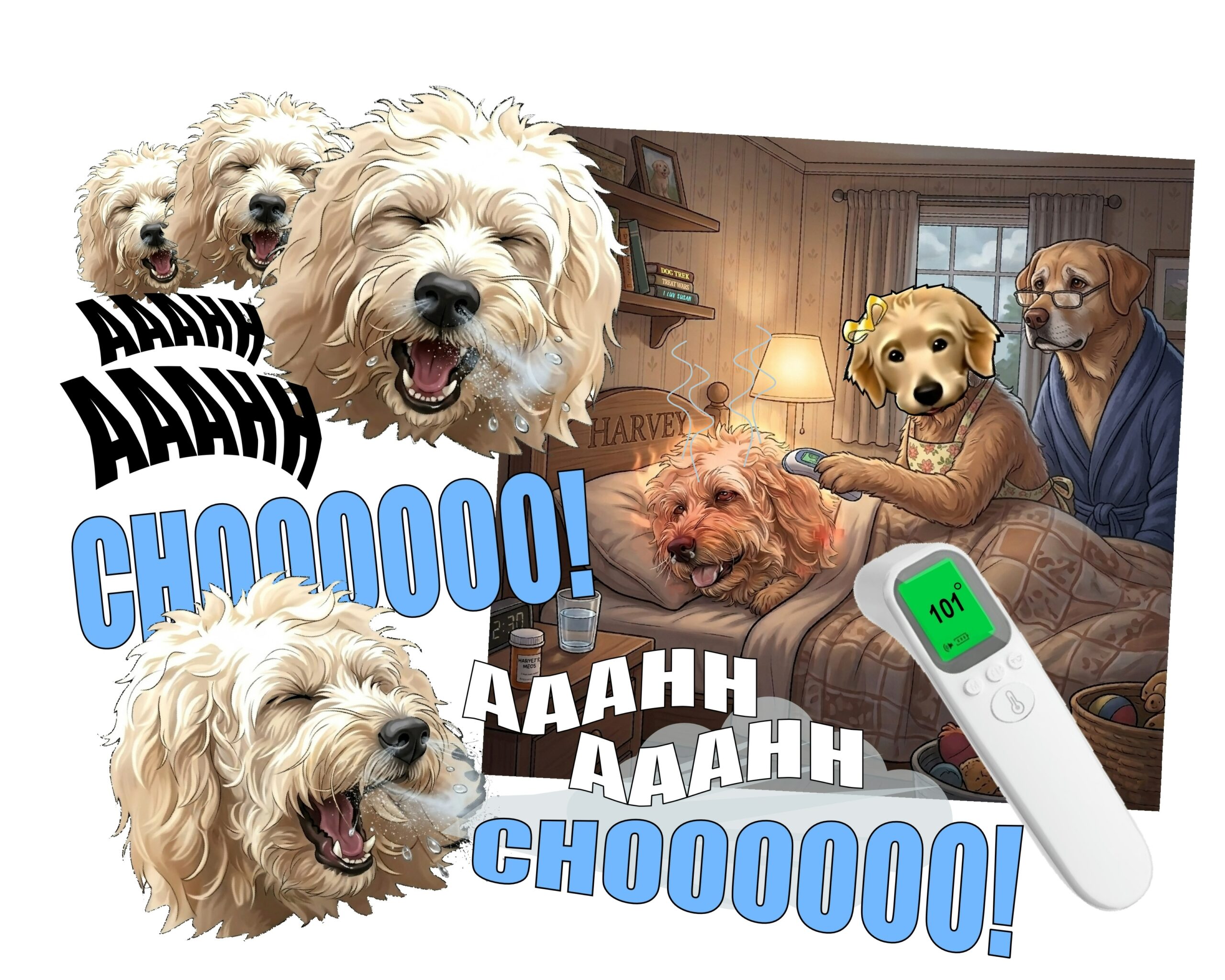
Harvey Stays Home To Get Better
A Bedtime Story About Listening to Your Body and Taking Care of Others
I woke up, and something felt… off.
My head hurt. My throat felt scratchy. And then—achoo!—I sneezed. Then I coughed.
“Hmm,” I said quietly. “I don’t feel like myself.”
Yesterday, I was running and playing and having fun with my friends. But today, I felt slow and tired. My body ached, and I didn’t even feel like getting out of bed.
Mom came in and sat beside me.
“Good morning, Harvey,” she said gently. “How are you feeling?”
“I don’t feel good,” I told her. “My head hurts, and I keep coughing and sneezing.”
Mom put her paw on my forehead.
“You feel warm,” she said. “Let’s take your temperature.”
She used a thermometer and waited a few seconds.
“You have a fever,” she said. “That usually means your body is fighting an infection.”
“My body is fighting?” I asked.
“That’s right,” Mom said. “Your body is working hard to get rid of germs and help you feel better.”
Dad came in to check on me, too. He called the doctor to talk about my symptoms.
After the call, Dad said,
“The doctor says you need to stay home today and rest.”
“Stay home?” I asked. “But I wanted to go to school.”
“I know,” Mom said kindly. “But when we’re sick, we stay home so we don’t spread germs to others. That helps keep our friends and teachers healthy.”
I thought about my friends. I didn’t want them to feel like this.
“Okay,” I said. “I’ll stay home.”
Mom brought me a glass of water.
“Drinking fluids helps your body,” she explained.
I took a sip. Even though I didn’t feel like eating much, I knew my body needed care.
Dad gave me some medicine to help with my fever and aches.
“This will help you feel more comfortable,” he said.
Then Mom tucked me into a cozy blanket on the couch.
“Your job today,” she said, “is to rest.”
“That’s it?” I asked.
“That’s it,” she smiled. “Rest, drink fluids, and let your body do its work.”
So I rested.
I watched a quiet show. I closed my eyes. I slept.
Sometimes I coughed. Sometimes I sneezed. Sometimes I just felt tired.
I washed my hands a lot!
Mom and Dad checked on me often.
“We’re watching you closely,” Mom said. “That’s how we help you stay safe while your body heals.”
The next day, I still didn’t feel great.
But the day after that… something changed.
I woke up and stretched.
My head didn’t hurt anymore. My throat felt better. And I didn’t cough when I got out of bed.
“I feel better!” I said.
Mom smiled. “Your body did its job.”
After a few days of rest, fluids, and care, I was ready.
“Can I go back to school tomorrow?” I asked.
“Yes,” Dad said. “You’re healthy again—and ready to learn and play.”
I felt proud.
I listened to my body. I stayed home when I was sick. And I helped protect others, too.
And now…
I was ready to run again.
TALK ABOUT IT
- · How did Harvey know he was sick?
- · Why did Harvey’s parents take his temperature?
- · Why is it important to stay home when you’re sick?
- · What helped Harvey feel better?
- · Have you ever stayed home when you didn’t feel well?
A Note for Parents and Caregivers
This story helps children recognize when they are sick and understand what to do.
Key messages:
- · Symptoms like fever, cough, fatigue, and body aches can mean illness.
- · Fever is a sign the body is fighting infection.
- · Staying home prevents spreading germs to others.
- · Rest and fluids are essential for recovery.
- · Children may eat less when sick—hydration is most important.
- · Caregivers should monitor symptoms and contact a healthcare provider as needed.
Decision-Making Skill: Children learn that staying home when sick is a responsible choice that protects others—an early foundation for lifelong healthy decision-making.